New Waves (2024)
New Waves (2024)
Commissioned by Asia New Zealand Foundation and written by Rosabel Tan, New Waves (2024) offers unique insight into New Zealand’s changing relationships with and in Asia through the arts — and how this, in turn, is changing the nature of what is happening in Aotearoa. Read the full report here.
—
Over the past few decades, many countries across Asia have focused on establishing themselves as global creative powers, with governments recognising the economic, social and political value of investing in their creative economies. The impact of this has been significant, and its influence on Aotearoa has been profound. We are now witnessing a growing, unmet demand for Asian arts and cultural experiences — with, for instance, 1.6 million people expressing interest in attending an art exhibition featuring Asian artists for the first time.
This demand will only increase as countries across Asia continue to invest in their creative industries, and we have a powerful opportunity in Aotearoa to respond to and harness this. The benefits of doing so are not only economic, but sociocultural: being able to access a range of work from across Asia keeps us connected to a global conversation and deepens our ability to understand one another’s cultural worldviews, something that benefits us at home in our increasingly multicultural society as well as abroad. Through creating multifaceted and meaningful access to different types of work — both from Asia and by our Asian diaspora artists in Aotearoa — we strengthen individual and collective wellbeing by fostering a deeper sense of social cohesion, community and belonging.
How do we reap these benefits? By starting with a long-term vision that creates opportunities to not only keep up with the vital, thrilling and complex conversations taking place across Asia, but to be part of them too. This means prioritising relationship building with artists and practitioners, underpinned by a culturally informed approach that doesn’t underestimate — but instead journeys alongside — our audiences, providing opportunities to deepen our collective intercultural fluencies.
There are more philosophical questions for us to consider, too. What images of ‘Asia’ are being presented, and what ‘Asia’ is being defined in our public consciousness based on the flows of cultural products reaching our shores? How do unequal power relations across nations — shaped by differences in sociopolitical and economic stability and access to resources for artists — become mediated, understood and challenged through this exchange? And what implications does that have for us here in Aotearoa?
Recommendations for policymakers
- Invest in the development of intercultural fluency
It’s essential that we work within the multidimensional framework of ‘culture’ as we invest in this sector. This includes creating opportunities for arts practitioners to spend time across Asia and vice versa: to deepen their cultural, sociopolitical and artistic understanding for collaborations and partnerships, and to share their experiences back home. These might include residencies, guided research tours and attendance at arts markets and conferences — but it might also include the development of cultural guidelines and advisory, including the creation of simple, practical resources like an up-to-date list of contacts and funding avenues. - Invest in strategic incubators for the development of Aotearoa-specific work
We are already seeing similar initiatives across Asia, and we know that a point of connection for Aotearoa is not only our significant diaspora communities, but key explorations such as how tangata Tiriti artists are thinking about their relationship to Indigenous communities and colonisation. Could there be an incubator or a residency programme for artists to explore and create work together, specifically for presentation to an Aotearoa audience — co-funded with institutions across Australia, for example? Perhaps an initiative that is itself based in Asia, with an aim towards presentation here? Might there be seed funding to enable institutions and festivals to immediately start working more effectively with Asian artists, recognising that investing in work might mean commissioning projects that are not as market-ready as work from countries with more resourced public arts funding?
- Support deeper approaches to the presentation of work
This point ties back to how we then continue to deepen intercultural fluency across Aotearoa. Art and culture present rich opportunities to deepen engagement with, and understanding of, different contemporary cultural contexts. Too often, this becomes a missed opportunity. Examine ways to support the cultural sector to invest in the marketing, public programming and media coverage surrounding a work in order to capitalise on the opportunities that these presentations offer.
Recommendations for cultural leaders
- Create and prioritise the time needed to keep deepening cultural fluency
In other words, invest in a long-term vision that places people and relationships at the heart. If you are able to travel, travel to Asia. Meet artists, experience their work, and do that work justice by learning about and sitting with the contexts in which the work has been made. - Invest in artists you believe in
The first step to doing this is understanding the context that artists are operating in and the way their work is evolving as a result. This is not simply about understanding their cultural worldviews and protocols, but understanding the sociopolitical and arts-production contexts that artists are navigating in their process.
Because of the different funding ecologies in which work is being made, consider ways in which active and equitable collaborations might take place. Consider ways in which artists might also be connected with diaspora communities in Aotearoa, and whether there is room for artistic collaborations and responses grounded in this place. - Invest in developing the collective cultural fluency needed to enable the work to soar
This includes developing clear processes so you can embark on a collaboration with a mutual understanding of one another and the different ways of working. Critically, this is a multi-directional dialogue, because it involves all collaborators being able to understand each other’s ways of doing and ways of knowing. - Understand the Asia you’re presenting — and give your audiences the opportunity to understand that too
This consideration sits at the heart of decision-making and flows on from the collective cultural fluency that guides the process of commissioning and development. It might mean allocating resources to ensure the work is effectively presented: ensuring the marketing and public programming team has the ability to understand not only how to reach a work’s many potential audiences but how that work can be a gateway to deepening engagement and understanding of the sophisticated and nuanced conversations that the work itself is presenting.
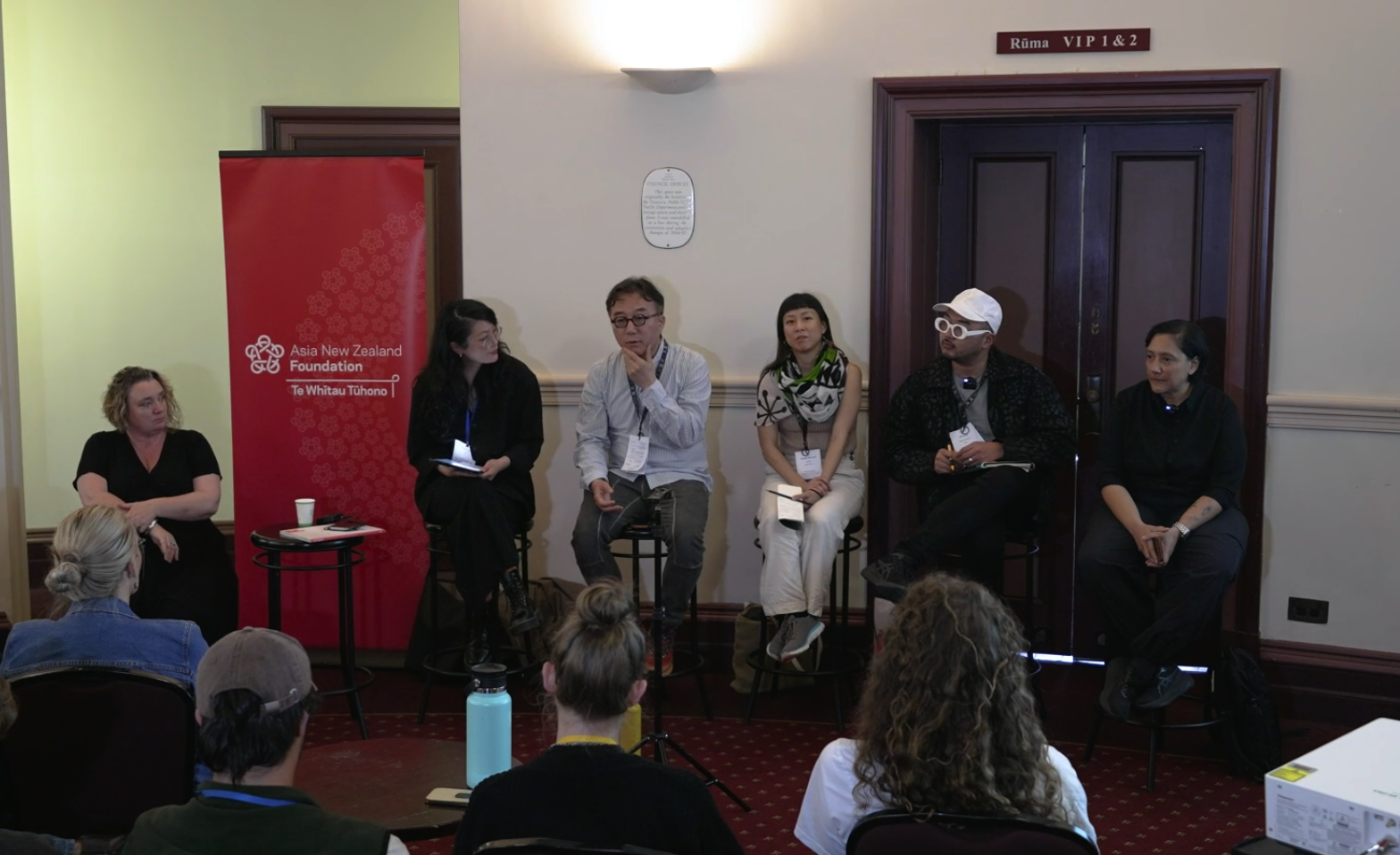
As part of the launch of this report, Rosabel Tan hosted a talk at PANNZ 2024 exploring transnational collaboration and different cultural sector contexts with Kyu Choi (Seoul Performing Arts Festival), Natalie Hennedige (Singapore International Festival of the Arts), Sasapin Siriwanij (Bangkok International Performing Arts Meeting) and River Lin (Taipei Arts Festival). You can watch that here.
Report design by Aaron McKirdy